KNX vs DALI: Which Lighting Control System Is Better for Smart Buildings?

In the rapidly evolving world of smart building technology, two protocols dominate the lighting landscape: KNX and DALI. For electrical consultants, system integrators, and developers, the choice often centers on finding the right DALI KNX Controller to bridge these technologies. While KNX is a complete building automation standard, DALI (Digital Addressable Lighting Interface) is a dedicated protocol specifically for lighting ballasts and drivers. Choosing between DALI or KNX depends entirely on the scale, complexity, and specific requirements of your project.
At KNX Bazzar, we often see large-scale commercial projects utilizing a hybrid approach—integrating the best of both worlds. For example, using an ABB DALI Gateways to connect a DALI network to a high-performance ABB i-bus KNX backbone is a standard industry practice. This article breaks down the technical differences, wiring strategies, and performance metrics of DALI-2 vs KNX to help you make an informed decision.
What is the Difference Between KNX and DALI?
To understand what is the difference between KNX and DALI, one must first look at their scope. KNX is a decentralized “interdisciplinary” system. It can control lighting, shutters, HVAC, security, and energy management. DALI, on the other hand, is a localized “specialist” system. It was designed to replace 1-10V analog dimming and provides granular control over individual light fixtures and emergency lighting units.
In a DALI-2 vs KNX comparison, DALI-2 (the latest version) brings improved interoperability and the inclusion of control devices like sensors. However, a DALI KNX Controller remains the superior choice for overall building logic. While a DALI line is limited to 64 addresses, a KNX system can expand to over 50,000 devices. Therefore, for whole-building control, the debate is rarely about choosing one over the other; it is about how to integrate them. High-capacity actuators like the EAE RCU2000 are often used for general switching, while a gateway handles architectural dimming.

KNX vs DALI Lighting Control: Architecture and Performance
When discussing KNX vs DALI lighting control, the primary technical difference lies in “intelligence.” KNX is decentralized; if one device fails, the rest of the system continues to function. In many traditional DALI setups, if the central DALI controller fails, the entire line may become unresponsive. However, the introduction of DALI-2 and high-quality DALI KNX Controller modules has narrowed this gap by improving the reliability of control devices.
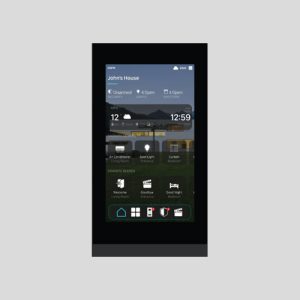
In a professional setting, should you choose DALI or KNX for lighting specifically? DALI is often preferred for high-end dimming (0.1% to 100%) and tunable white (Circadian) lighting because the “dimming curve” is stored in the ballast itself, ensuring perfectly smooth transitions. For projects requiring robust room control alongside lighting, the EAE RCU2018 is a favorite, as it manages local inputs and outputs while communicating with a centralized Interra KNX server for global scenes.
Top Rated DALI KNX Controller Options for 2026
If you are looking to integrate these two protocols, choosing the right hardware is essential. Here are the top-performing gateways available at KNX Bazzar:
- Schneider Electric (Merten): The Merten KNX DALI Gateway 2-Output is ideal for managing two separate DALI lines from a single KNX device. For simpler setups, the Merten Basic Gateway provides essential control at a competitive price.
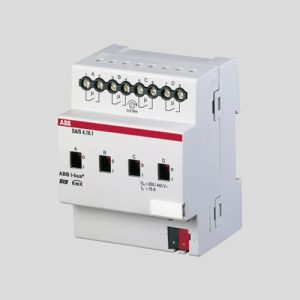
- ABB: Known for industrial reliability, the ABB DG/S1.64.1.1 and the 2-fold version are the backbone of many global airports and hospitals.
- EAE Technology: The EAE DA110 and EAE DA100 offer incredible performance-to-price ratios, making them favorites for medium-sized commercial projects.
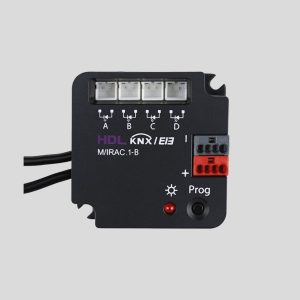
- HDL: The HDL M-DALI.1 Master Actuator is a robust solution for architectural lighting integration.
KNX vs DALI Wiring Diagram: Practical Installation Differences
A common search for integrators is the KNX vs DALI wiring diagram. The wiring philosophies are distinct:
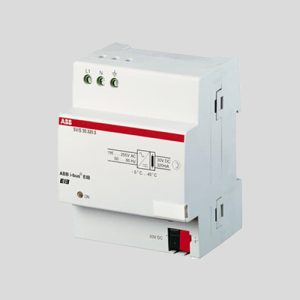
- KNX Wiring: Uses a dedicated, shielded green bus cable. It requires a specialized power supply to provide the 30V DC bus voltage and choke. KNX wiring can be run in Star, Line, or Tree topologies.
- DALI Wiring: Does not require a specialized bus cable. It can be run using standard 5-core electrical wire. Because the DALI signal is low-voltage but not SELV, it can be run in the same conduit as the 230V power lines.
Many discussions on KNX vs DALI Reddit threads point out that DALI wiring is simpler for electrical contractors. However, KNX offers significantly more flexibility for adding sensors and touch panels later. If you are designing a high-density panel, using an EAE RCU2000 KNX ACTUATOR helps centralize the KNX side, while the DALI KNX Controller sends the signal out to the luminaires.
The Hybrid Solution: The Best of Both Worlds
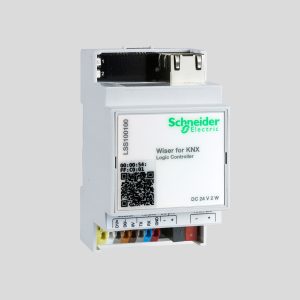
The modern consensus is no longer KNX vs DALI, but rather how to bridge them. Using a DALI KNX Controller allows the building to have a “KNX Backbone” for logic and a “DALI Sub-net” for the luminaires. This hybrid strategy provides several advantages:
- Feedback: DALI provides detailed feedback (lamp failure, ballast error) to the KNX system.
- Emergency Lighting: DALI is the global standard for testing and reporting on emergency battery packs.
- Cost Efficiency: You can use a single power supply to power a KNX line that manages dozens of DALI gateways.
Join the KNX Bazzar Dealer Program
Are you an integrator or a developer looking for the best wholesale prices on ABB, Schneider, or Interra? KNX Bazzar is designed for professionals. To access exclusive pricing and technical support, we invite you to sign up and fill out our dealers form. Becoming a partner allows you to unlock special project discounts that help you win more tenders.
DALI-2 vs KNX: Comparison Table
| Feature | KNX System | DALI-2 (via Controller) |
|---|---|---|
| Application Scope | Whole Building Automation | Specialized Lighting Control |
| Device Limit | Virtually Unlimited | 64 Addresses per line |
| Dimming Precision | High | Industry Leading (Logarithmic) |
Conclusion: The Verdict on KNX vs DALI
Ultimately, the choice between KNX vs DALI isn’t about which is “better,” but which is right for the application. KNX provides the structure, the user interfaces, and the cross-discipline logic. DALI provides the precision and feedback for the light fixtures themselves. The DALI KNX Controller is the essential link that allows these two systems to communicate perfectly.
Ready to upgrade your lighting control? Explore our wide range of DALI and KNX integration products. At KNX Bazzar, we stock everything you need—from the essential KNX power supplies to advanced Interra KNX servers—to ensure your smart building project is a success. For more technical standards, you can also visit the official KNX Association website.